Tuesday, February 3, 2009

Miscellany


That basically describes the distribution period, and what I've been doing... none of which are really blog-worthy on their own (in the form of some kind of cohesive story) but I can stick them all together to give you some idea of my "spring". (I'm aware that it is technically the "spring" semester but it's still 5 degrees at night... and during the day... so I refuse to call it that until, oh, May.)

Comparative anatomy
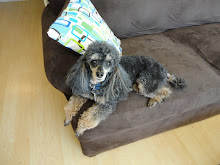
Taking up most of my class time is dissection, once again. This time it's not dogs, it's... whatever the professor can wheel and deal for on this strange anatomy professor network of animal parts suppliers, from biological companies to zoos to whoever happened to have an interesting species die this week/month/year/etc. (Seriously. They have a listserv and bargain with each other for whose school gets the interesting carcasses.) We've primarily been working on two goats, a sheep, and three rabbits (that is not a dissection rabbit, that is MY rabbit, see below), but we had a brief visit from some elephant wrists last week and today was a batch of recently killed woodchucks- revenge for the rodents giving us six more weeks of winter yesterday. Not that we'd have any less than that here. Still. The point of the class is to note similarities across species and basically get a feel for the anatomy of non-dog animals we may, or may not, encounter in practice someday. Later we'll have some reptiles, maybe some birds, we'll see... allegedly our professor is trying to arrange for us to dissect half a dolphin soon... should be interesting :)

Large Animal Neonates
I'm not a large animal person by any stretch but this is a cool distribution because a large part of it involves volunteering as a foal sitter in the LA Neonatal ICU. "Foal season" recently started and the sickest ones are starting to trickle into the hospital... my first shift is later in the month so we'll see how that goes!

Neuroanatomy
Is death. 'Nuff said. Hey at least it's not brain surgery! Wait...

Other than class....

CPS
OK, technically I am getting credit for this, but it's quasi-extracurricular. It involves working in the Community Practice Service taking patient histories and performing the first of several physical exams on patients by progressively more experienced students. Of course, it's winter, and the caseload is somewhat low, so when there aren't any clients they ship us off to whatever hospital service will take a shadow for a few hours. Which is kind of cool... it works out to be like mini-clinics. One day they tagged me onto an exotics case (ferret with insulinoma... see why I didn't get a ferret?) which got sent to ICU, so I wound up in ICU for the afternoon. Another day I hung out in internal medicine with some third years. It's a good taste of what's to come in two years, which I prefer not to think about quite yet...

VSPCA
Yes technically I got credit for this too through CPS but I do it anyway because it's fun :) We do shelter intake physical exams at the local SPCA once a month, and it's a great way to practice your PE without clients shooting nervous glances at you. My pig-bleeding skills appear to be better than my cat-bleeding skills, however, so I need all the practice I can get...

SVECCS
Basically all the vet school clubs are known by acronyms, in case you didn't notice... I *think* this one stands for Society of Veterinary Emergency and Critical Care Specialists... or maybe it's Students... you get the idea either way. I got to shadow another day in the ICU through this group which was pretty cool. Again, low caseload, but I got to sit in on rounds with the upperclassmen and hopefully absorbed some really useful information about acute liver failure in cats, and fluid therapy. Or it possibly escaped my mind shortly after listening since I only understood about 1/3 of what they were talking about... oh well, I tried. It'll be put back in another 2 years.

Basil
Is my bunny, for those who don't know, and provides entertainment in lieu of television. Last week he happy-danced himself right off my bed. Last night he tried to jump through a mirror to greet the bunny on the other side (it failed). Today he brought large pieces of the straw mat he's been destroying to the door of his cage to show me all the progress he's made. It's nice to be reminded of why I'm here sometimes :)

Friday, January 16, 2009

Two down...

... an awful lot to go.

Finished Block II, finally, and now it's off to distributions on Monday. The final wasn't nearly as exciting/stressful as Block I so I don't have any entertaining stories this time (other than the windchill being -10 degrees F... go ahead and laugh, all you people in reasonable climates...), just your basic reasonable multiple-choice exam. Woo.

For those wondering why the heck I just took a final when most college/grad students aren't even back in school yet, I can attempt to explain Cornell's schedule... but be warned, it's been known to make peoples' heads explode.

- There are seven foundation blocks (numbered 1-7), plus neuroanatomy and parasitology, that you must pass.
- These blocks are set lengths that are not the same as each other, and do not care that large vacations land in the middle of them.
- Block VII runs for 2.5 years, and is broken up into a, b, c, etc.- each segment runs alongside another foundation block (Block I with VIIa, II with VIIb, and so on)
- Block II runs right over the 2-week winter break, 3/4s before and 1/4 after... which is why I'm here.
- To make life interesting, there are things called "distribution periods" in the spring (where we take elective- i.e. "distribution"- classes). They are labelled A, B, C, and D, and they are the same time for all classes.
- Distributions can be A, B, C, D, AB, CD and there might even be some ABCDs. Head hurting yet?
- Several distributions don't even have to be completed in the distribution period- you have a year to complete the requirements. There's at least one held in the fall, when there is no distribution period.
- Neuroanatomy is not a distribution, but you have to take it in the AB period of your first year.
- Block III starts right after distributions, then you get 2 months of summer vacation and come back for a month of Block III and a final.
- Block IV runs concurrently with parasitology, because somebody out there is very, very mean. But at least you get a normal winter break after.
- I can see smoke coming out of your ears.
- Block VI is when things get really interesting, because it's clinics, so it gets broken up into 2-week chunks... and I haven't even tried to figure them out yet because I'm still stuck on the fact that my classes start Monday. But not all of them. And some have already started. And one I can't register for yet.

So the lesson of the day is... a large part of being a vet student, at least here, is figuring out where you're supposed to be on any given day :)

Wednesday, January 7, 2009

Bovine Pedicures, Dead Ponies, and Another Day to be Grateful to be a Small Animal Person

Block VII- never (well, rarely) a dull moment.

Today was our lesson on bovine hoof care, which we expected to be a lecture and demonstration but in reality involved a line of rather disgusting cadaver feet, dull knives and sore arms (and few coveralls, since, well, we were kind of expecting a lecture). Bovine hoof trimmers are called just that- hoof trimmers- and are not related to farriers, who trim horse feet. Don't ask me why. It's a large animal thing. Anyway, wherever these particular cows came from couldn't have been such a nice place, as the hooves were all kinds of overgrown and we got an impromptu lesson in various lesions and disorders of the bovine foot as well as how to give them a pedicure. Did I mention the disgusting part? (No formalin either- nice and stinky.) Our task was to "trim" the pointed ends of the toes to an appropriate length, then "file" the rest of the hoof to a flat, even surface. I use these terms loosely since the reality is that you must hack and wrestle the pointed ends off and scrape, grind and saw at the rest of the foot to get even the smallest bit accomplished. Dead feet were used because living cows would have sent us flying across the breezeway, and we would have certainly deserved it. The only thing more discouraging than our pitiable attempt at hoof trimming was when the instructor came over to our "finished" foot and calmly removed another finger-sized chunk of hoof in about three seconds without breaking a sweat. Actually... I lied about the most discouraging part. The breezeway struck again... more depressing than futilely hacking at hoof wall was the three forklifts full of dead ponies and foals coming out of junior surgery, since the upperclassmen were finishing up a non-survival surgery lesson. Probably not the worst thing in the world- we're vets, dead things happen, especially in school - but it was more than enough death for one afternoon. Still, as they say, never a dull moment... and yet another reason to sigh and think "Boy, am I glad I'm going into small animal medicine."

On the bright side, at least they didn't ask us to trim the ponies' feet...

Monday, January 5, 2009

Don't buy puppies from pet stores.


Back from vacation and off and running on the next project, which happens to be an ethics presentation on "designer dogs". Because an awful lot of these very expensive mutts come from pet stores, and therefore large-scale puppy mills, I have spent the last two hours digging through articles about all the awfulness that is the pet trade. This makes me angry. Therefore I feel the need to explain my position on puppy mills to anyone who will listen, because we need as many voices as possible raising the alarm about pet store puppies. If you've already heard my rant, please feel free to tune in next week for... uh... Bovine Foot Care? Ok, there might not be anything interesting for a while (finals next week). But you can take the free pass anyway ;)

*climbs on soapbox*

Do not buy puppies from pet stores. Ever. Under any circumstances. I do not care how cute it is. I do not care that you have spent MONTHS looking for a puggle or a malti-poo or teacup schnoodle or whatever and CANNOT wait any longer. I do not care that you think that ONE puppy needs saving, because when you buy that dog you have assisted in the killing of countless others in the hell-camps known as puppy mills across the country. If you have already purchased a pet store puppy, I am sorry for you. I am sorry that you paid far too much for a dog that's probably riddled with disease, behavioral problems, and congenital defects that will crop up down the line. I am even more sorry for the dog. Still, you probably didn't know what was going on. Unfortunately, it seems like a staggering amount of people in this country are completely unaware of where those puppies in the window come from. That is why I, along with countless other animal lovers, have sworn to denounce this embarrassment to humankind to our very last breath.

Ok. I feel slightly better now. Hopefully, somebody, someday, somewhere will listen to me and the thousands of other rabid anti-puppy mill crusaders and adopt instead of buying into cruelty. Please be one of them. And if you're not getting a puppy anytime soon, please join the rest of us in educating anyone who will listen about these animals... because the knowledge needs to be spread.

For more information... (there are an infinite number of resources out there, these are just a few)
The Modern Kennel Conundrum (The New York Times)
ASPCA Puppy Mill Information Page
HSUS Stop Puppy Mills campaign

Monday, December 15, 2008

Dehorning Day

It showed up on our schedule as "Calf and Heifer Management", which, judging by the way this block has been going, sounded like another lecture and maybe a demonstration of... something involving calves. (We just finished a midterm Friday. Let's just say it wasn't really coming in on our radar.) So it was a little bit of a shock to read the lab instructions over the weekend and find that they included directions on nerve blocks and how to use a dehorning tool. Sorry, you want us to what? You do realize we've only been vet students for three months, right?

This might not have been quite as scary had Block I not instilled in us the fear of the bovine head. Large animals, owing to their large size, have heads that are mostly filled with air (yes, horse people, you may laugh). Their sinuses are enormous relative to ours to reduce the weight of the head and make it less of a burden for the animal to carry around. Horns are an interesting addition to these air pockets in the cow. They start out as horn buds on young calves, little bony disks just above the skull, and eventually fuse with the skull and the sinus just beneath it. Ideally, calves are de-horned before the disk fuses, to avoid breaching the sinus cavity and inviting lots of nasty infection when the horn is removed. And this is where Block I made us all afraid to ever de-horn a calf. The dehorning tool is basically a self-heating hot iron rod with a cupped end- you press the hot end onto the anesthetized horn bud, hold it for a second, and scoop the little piece off. Simple... except that calves' skulls are rather thin, just like human babies', and holding the iron on too long can occasionally result in cooked calf brain. VERY BAD. Block I liked to frequently remind us of this just in case some of us managed to forget the image of rotisserie brain (with necropsy pictures included).

Actually, it seems like the risk was a little overstated in practice, at least with the style of iron that we used. Or, I assume it was, since 20ish (heavily supervised) first years managed to dehorn 10-15 calves without leaving anyone screaming in pain or neurologically damaged. Still, standing there with a squirming calf between your legs and having a hot iron shoved into your hand to be pressed onto the cute furry animal's head is awkward, no matter how encouraging and wonderful the instructors are. I definitely support dehorning cattle of any type- of course it's not ideal, but do YOU want to handle a 2-ton wad of muscle with 360-degree kicking skills AND horns?- and whenever anyone complains about early-life animal alterations I'm forced to remind them of how we circumcise human males at a day or two old, and they seem to work out (Freud notwithstanding). No living thing has a stress-free existence, and sometimes living indoors, safe from predators, with medical care and constant access to food, comes with a day or so of ouchies for the safety of the handlers. (I haven't met any adult horn-less cows that held a grudge.) Making sure that the process is done well and with as little pain as possible is our job, and it's why I don't mind these kind of awkward tasks- because whether or not I agree with it, I'm glad that they're teaching us to do it right.

And, campylobacter be damned, we did give our calf a hug and some snuggles when we were done. Fuzzy winter calves *are* just about the most adorable baby animals on Earth :)

*EDIT: Technically the procedure we performed was disbudding, the removal of the horn buds, but it was all lumped under the term "dehorning" in our lectures. If you're curious, this is AVMA's position on dehorning/disbudding. I do have to disagree slightly with them on one point... breeding for polled (hornless) cattle is probably not the greatest idea because monkeying with genetics tends to bring a host of other issues. See- the English bulldog, the Manx cat, the Dalmatian, etc. Breeding for one trait just doesn't end well for the breed in question most of the time.

Thursday, December 11, 2008

Lack of posting... more soon, I swear


Sorry about the lack of posting... there's been a lack of interesting to post about unfortunately. Our Block II midterm is tomorrow which will be *so* much fun, what with the fact that most of us hate it and there will be 6-10" of snow on the ground in our way to getting there. Yippee. One more hoop to jump, of many that are waiting.

On a happier note, I start volunteering with the local SPCA's behavior program on Saturday so I may have interesting things to post then. There's also a lab at a local dairy coming up and then... Christmas break! All two weeks of it!

Anyway, back to the books... wish me luck!

Monday, December 1, 2008

The Farrier Shop


The art of the farrier and blacksmith is hardly romanticized, but perhaps it should be.

Today was our farrier lab, where we got a crash course in what farriers do and how they do it. For those who don't know, farriers manage horse feet, performing trims and maintenance as well as their more well-known task- making and fitting horseshoes. It's fascinating to watch. The farrier trims and studies the foot, taking into account a myriad of factors from the size and shape of the hoof, to any lameness or asymmetry the limb might have, to what the horse does as his day job. Through some secret algorithm in their head they come up with a shoe type... there are thousands. Iron, steel, rubber, plastic, aluminum. Smooth, ridged, studded, toe grab, heel grab. Raised, rounded, bar across the heel, frog support (the frog is the sensitive part of the hoof, akin to a dog's paw pad). Toe clip, quarter clip, clips all around. Nails or glue. And more. It's mind-boggling. When the farriers make their own shoes (some are formed from metal bars, others are fitted from premade forms), the bar must be heated 1/2 at a time and hammered into shape in only a few minutes before it cools. While pounding at this blistering hot piece of metal with a very heavy hammer, the farrier must also be thinking about the shape of the hoof he's trying to fit and therefore the final shape of the shoe- it's not like he has a pattern to work off of, and every hoof is different. There's also the risk of things going terribly wrong at every stage of the process. During trimming, there's about 3/8ths of an inch of space between insensitive hoof material and a bloody, painful mess. If the shoe isn't fitted correctly in any way, a horse can be permanently damaged- the old saying is very true: no hoof, no horse. There's also the fact that you're applying hot and sharp things to the main weapon of an animal about ten times your size who may or may not like you fiddling with his feet.

We got some interesting historical trivia during our demo as well. Apparently Napoleon, in his conquest of Moscow, had his blacksmiths fit the horses' shoes backwards on the march in, so that trackers would think they were retreating. This worked beautifully until it snowed, and the horses had no traction (and the blacksmiths had no time to fix it). And we all know how that conquest ended. When Alexander the Great marched his mounted armies into Asia, he never made it further than India because his horses weren't shod, while the Asian horses were. Alexander's cavalry had to rest for months at a time while their hooves grew out... sitting ducks for enemy attacks. Horses profoundly altered history as we know it... and so did their farriers!

All told, I developed an even deeper appreciation for farriers today... and was even more thankful that my heart lies in small animal medicine. When I have a horse someday, I'll be more than happy to pay somebody else to handle his pedicures!
Locations of visitors to this page